What counts as a weather disruption?
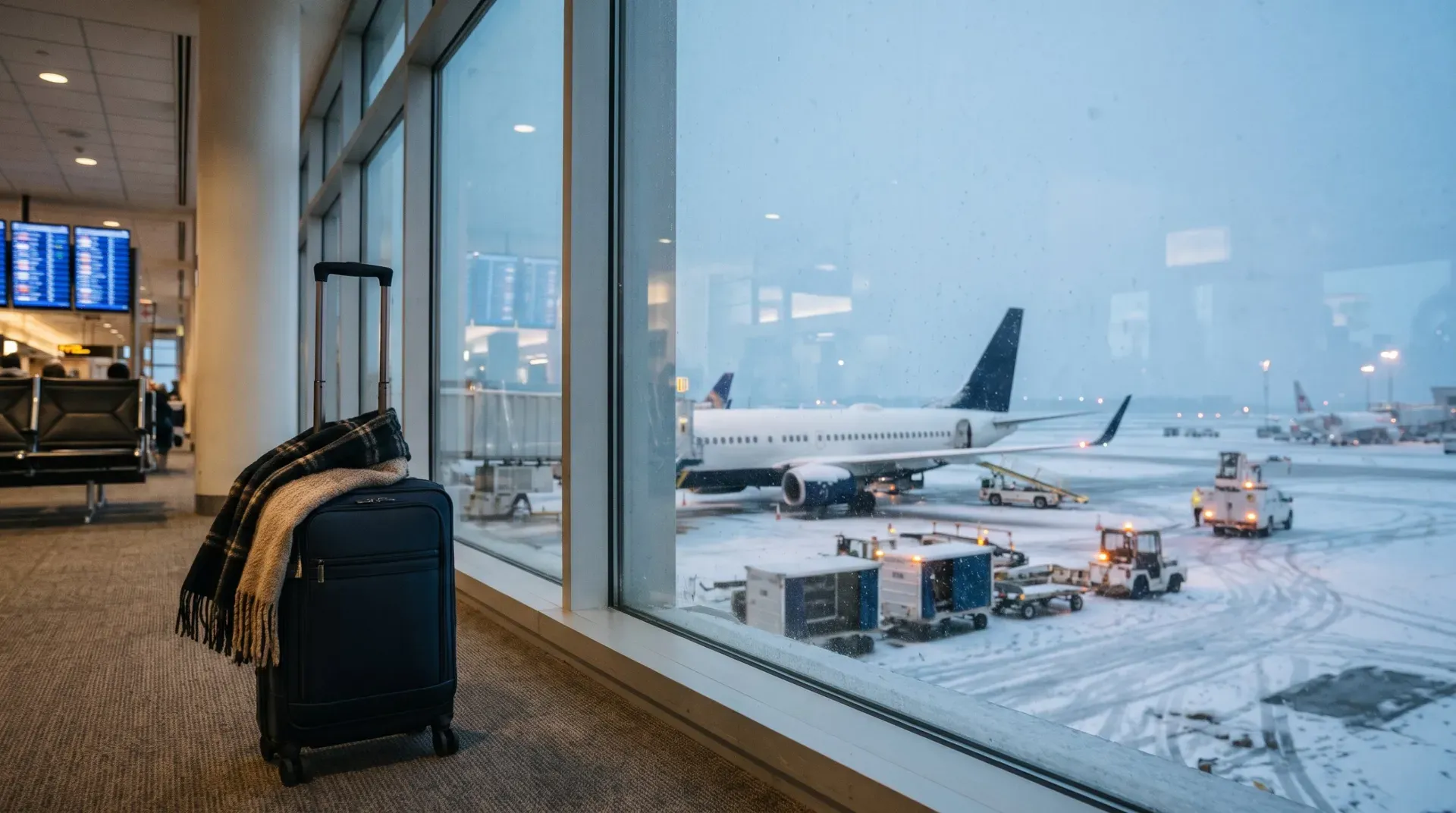
Snow, freezing rain, ice, strong winds and poor visibility can affect runway operations, de-icing, aircraft movement and airport capacity. In Canada, the CTA identifies extreme weather and meteorological conditions that make safe aircraft operation impossible as examples of situations outside an airline's control. The precise cause still matters: a storm may trigger a delay, but a later crew-scheduling or maintenance issue may be assessed differently.
Do not assume every disruption announced during a storm is automatically a weather exemption. Ask the airline to state the specific reason for your flight's delay or cancellation and whether it classifies the event as outside its control, within its control but required for safety, or within its control.
US flight cancellations: when can you get your money back?
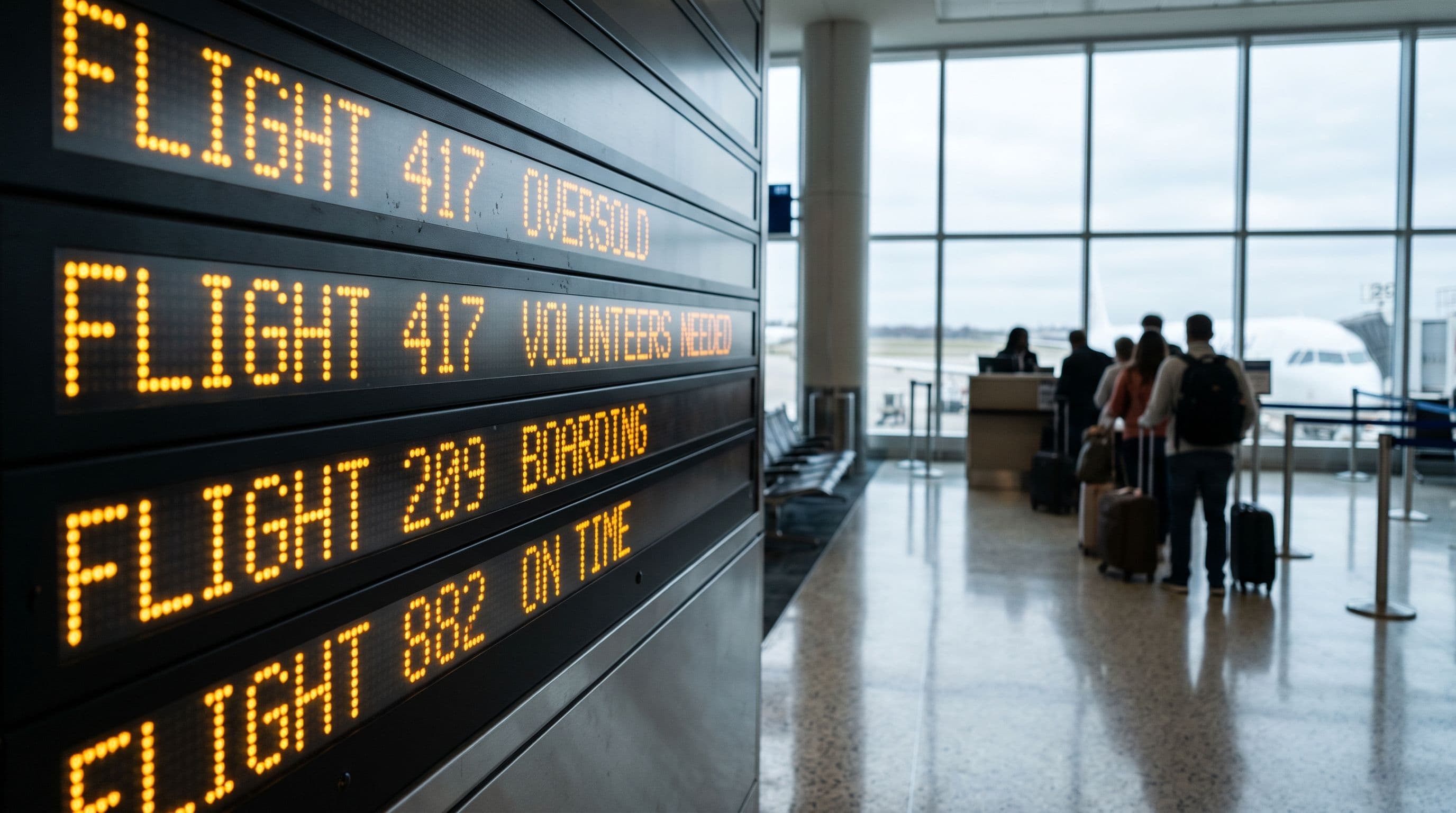
For flights to, from or within the United States, the DOT requires a refund when the airline cancels the flight and you choose not to travel or accept the alternative offered. A refund can also be due when the airline makes a significant change and you reject the changed itinerary. This applies even if the ticket was labelled non-refundable.
TheDOT's refund pageexplains the significant-change standards and refund timing. Check the current definition there rather than relying on an airline agent's informal description.
For ordinary domestic delays, US federal rules do not generally require airlines to pay cash compensation simply because you arrive late. Meals, hotels and other care depend on the airline's customer-service commitments and the circumstances. Check theDOT Airline Cancellation and Delay Dashboardand the airline's own policy.
- A refund is not the same as compensation.It returns the amount owed for the unused ticket; it does not automatically pay for missed plans, meals or a hotel.
- You can choose an offered rebooking instead.If you accept and travel, you generally are not entitled to a refund for the original ticket under the DOT refund rule.
- If you are offered a voucher or travel credit,you do not have to accept it instead of a refund when the DOT rule entitles you to a refund.
Canadian flight disruptions: three levels of airline control
Canada's APPR uses three categories. The category determines whether you may receive assistance, rebooking, a refund and compensation. The airline must communicate the reason and the options available to you.
For a claim for inconvenience compensation, the CTA says the disruption must be within the airline's control and not required for safety; you must have been told14 days or lessbefore the original departure; and you must arrive at your final destinationat least three hours late. A written claim must be filed with the airline withinone year.
Where the conditions are met, the published APPR amounts for large airlines areCA$400for an arrival delay of 3 to under 6 hours,CA$700for 6 to under 9 hours, andCA$1,000for 9 hours or more. For small airlines, the amounts are CA$125, CA$250 and CA$500 respectively. These are not automatic winter-storm payouts: the control category and every eligibility condition must be satisfied.
| APPR category | Examples / meaning | What may be owed |
|---|---|---|
| Within the airline's control | Examples include scheduled maintenance, staffing schedules or the airline's choice of aircraft. | Assistance, rebooking or refund, and inconvenience compensation if all legal conditions are met. |
| Within airline control but required for safety | An unplanned issue is within the airline's control but is necessary to address a safety concern. | Assistance and rebooking/refund may apply. Inconvenience compensation does not generally apply. |
| Outside airline control | Examples include extreme weather, security events, airport-operation issues and certain labour disruptions. | Rebooking or refund rights may still apply. No APPR inconvenience compensation for the outside-control event. |
What to do when your December flight is delayed or cancelled
- Open the airline app and check the flight status.Save a screenshot of the original itinerary, the new schedule and every notification.
- Ask the airline for the specific reason.In Canada, ask which APPR control category it is applying. Request the explanation in writing or keep the notification that states it.
- Ask for all available options before accepting one:rebooking, rerouting, refund, or any assistance the airline says it will provide. If you need to reach a time-sensitive event, ask whether another routing is available.
- Do not buy a replacement ticket in a rushwithout first checking the airline's rebooking obligations and your ticket conditions. A self-booked replacement may complicate reimbursement.
- Keep itemised receiptsfor meals, transport and accommodation. Ask the airline whether it will cover the expense before spending where practical; reimbursement is not guaranteed in every disruption category.
- If you choose a refund,state clearly that you are declining the alternative and want the refund to the original form of payment. Keep proof of the request.
- Submit any Canadian APPR compensation or expense claim in writingto the operating airline. Keep the claim confirmation and follow up if the airline does not respond within the CTA's stated timeframe.
Winter travel: the booking choices that reduce disruption risk
No itinerary can eliminate winter weather, but some choices make a disruption easier to manage. The goal is not to buy the most expensive ticket. It is to compare the full itinerary and understand the trade-offs before paying.
| Booking choice | Why it matters | What to check |
|---|---|---|
| Nonstop flight | Removes a connection where a missed onward flight can compound the delay. | Compare the nonstop total with connecting options, including bags and seat fees. |
| Earlier departure | Can leave more same-day recovery options if the flight is cancelled. | Check the day's schedule and whether later flights operate on the route. |
| Longer connection | Gives more time if the inbound flight is delayed or de-icing takes longer. | Avoid choosing a connection solely because it has the shortest layover. |
| Nearby alternate airport | May provide another route when one airport or corridor is disrupted. | Include ground transport, parking, tolls and the risk of separate tickets. |
| One ticket for the full itinerary | The airline can see the complete connection and has a single itinerary to manage. | Be cautious with self-transfer or separate-ticket combinations. |
A quick winter-disruption decision guide
Planning a December trip?Compare available routes and connection options in one place before you book.Search flights on FlySimple →
| If this happens… | Your next move |
|---|---|
| US airline cancels your flight | Decide whether to take the alternative or decline it and request the DOT refund. |
| Canadian flight cancelled by severe weather | Ask for rebooking or refund options; do not assume inconvenience compensation is due. |
| Canadian airline says the cause was within its control | Ask for the exact reason and check the APPR compensation conditions and arrival delay. |
| Airline offers a voucher | Compare it with your refund option before accepting. |
| You pay for meals or a hotel | Keep itemised receipts and ask the airline which expenses it will consider. |
More Travel Guides
- What to Do When Your Flight Is Delayed or Canceled (US Rules 2026)
- The Complete Canada → US → Everywhere Booking Guide
- Best Credit Cards for Trip-Delay Insurance in 2026
- When to Book Christmas Flights in 2026: Exact Dates by Route
Ready to test these savings on your next trip?
Search hundreds of global airline routes with live verified prices and 0% hidden markups.
Frequently Asked Questions
Common questions answered based on latest published policies & DOT regulations.
Resources and References
Official regulatory pages and verified data sources referenced in this guide.
US DOT: Refunds— current rules for cancellations, significant changes, refund choices and timing
US DOT: Airline Cancellation and Delay Dashboard— airline-specific customer-service commitments for controllable delays and cancellations
US DOT: Fly Rights— general US passenger guidance on delays and cancellations
Canadian Transportation Agency: Flight delays and cancellations— plain-language overview of APPR categories, assistance and claims
Canadian Transportation Agency: Rebooking, refunds and compensation— detailed conditions and compensation amounts under the APPR
The Bottom Line
Winter weather can disrupt any December itinerary, but it does not erase every passenger right. In the US, focus on the refund choice when a flight is cancelled or significantly changed. In Canada, establish the APPR control category before deciding whether assistance or inconvenience compensation is available. Keep the paper trail, ask for the reason in writing, and do not confuse a refund with compensation.
At FlySimple, compare the complete route—not just the headline fare. A nonstop flight, a practical connection and an alternate airport can have very different costs and recovery options when winter weather changes your plans. Search a route. Compare the itinerary. Choose the option that makes sense for the whole trip.
Search a route. See the real total. That is the whole trip.