Basic economy is worth it when you can travel with just a personal item, do not need to sit in a specific seat, and do not need to change your flight. It is a trap the moment you have to buy back a bag, a seat assignment, or the ability to rebook. On US carriers in 2026, the break-even point is often less than $50, which means a basic economy fare has to beat main cabin by more than $50 to win once you add the essentials back in.
Basic economy is the airline industry's answer to Spirit and Frontier: strip out everything, price it aggressively, and let travellers add back only what they actually need. That works great if you know what you are giving up. It backfires if you do not.
This is the plain-English guide to when basic economy actually saves you money and when it costs you more than main cabin would have.
What "basic economy" actually means
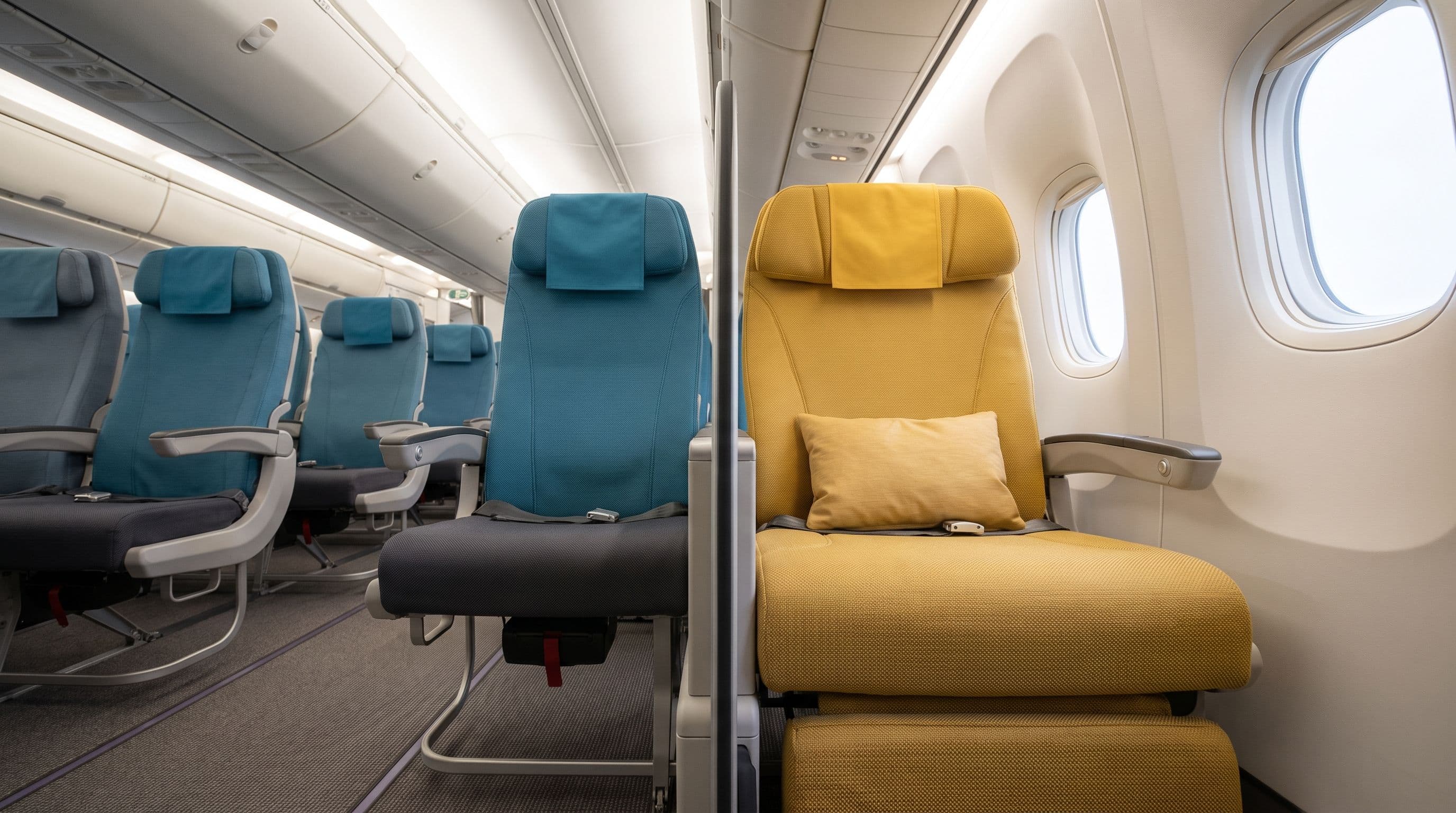
Basic economy is not a separate cabin. You are sitting in the same seats, on the same plane, eating the same nothing snack as everyone else in economy. What is different is your ticket. A basic economy ticket typically strips out:
The base fare is usually $30 to $80 cheaper than the main cabin fare. If you do not need any of those things back, you keep the difference. If you do, you pay for each one separately, and the math often flips.
- The ability to choose your seat in advance
- Your carry-on bag (on some carriers)
- Any right to change or cancel your flight
- Priority boarding (you board last)
- Elite mileage credit (on some carriers)
- Upgrade eligibility
What every airline's basic tier strips out
Here is what basic economy actually looks like on the six biggest US carriers in 2026:
Two things worth noting:
Southwest does not sell basic economy at all.Every Southwest ticket includes two free checked bags and open seating. If you are flying a Southwest route, the "basic economy vs main cabin" question does not apply. You just pick a fare tier (Wanna Get Away, Anytime, Business Select) based on flexibility.
American changed its basic economy policy in 2024to include a full-size carry-on. That is a big shift, and it made American Basic more competitive than United Basic on many routes.
| Airline | Carry-on | Seat pick | Changes | Elite miles |
|---|---|---|---|---|
| United Basic | No | Paid only | No | Reduced |
| American Basic | Yes (2024+) | Paid only | No | Reduced |
| Delta Basic | Yes | Paid at booking | No | Reduced |
| JetBlue Blue Basic | No | Paid only | No | None |
| Alaska Saver | Yes | Assigned | No | 30% less |
| Southwest | Yes | Open seating | Yes | Full |
The "true cost" math: when basic loses
This is where most travellers get burned. The base fare on basic economy looks $50 or $60 cheaper. But once you add back the things you actually need, that gap usually shrinks or disappears.
Rough numbers for a US roundtrip on United, American, or Delta in 2026:
If a basic economy fare is $50 cheaper than the main cabin fare and you need to add just one of those things, main cabin wins.
- Adding a checked bag:$70 (roughly $35 each way)
- Adding a seat assignment:$20 to $40 (an aisle or window on basic)
- Adding a carry-on bag on United or JetBlue:$70 to $90 roundtrip
When basic economy actually wins
A low-cost carrier's basic works after the math
Basic economy is a good deal in a few specific situations.
If your entire trip fits in a small backpack that goes under the seat in front of you, you are not paying carry-on fees, and basic economy on any airline works. This is the classic scenario for a weekend trip, a quick business meeting, or a college student flying home.
If you are happy with whatever seat the airline assigns you at check-in, and you do not mind sitting in the back, you are not paying seat selection fees.
If you know 100 percent that you are flying on the exact date and time on your ticket, the "no changes" restriction does not cost you anything.
Delta Basic is the friendliest of the major carriers' basic tiers. Carry-ons are included, you can still get mileage credit (at a reduced rate), and you can pay to select a seat at booking. It is basically a no-changes ticket, not a stripped-down cabin.
Sometimes Spirit or Frontier's base fare is so low that even after adding back the bag and seat, it is still cheaper than a legacy carrier's basic. Do the math case by case.
When basic economy is a trap
Skip basic economy if any of the following are true.
You are checking a bag.Add $70 for a checked bag and the discount is usually gone.
You need to sit next to a specific person.If you are travelling with a partner, kid, or family member, being assigned a random seat at check-in means there is a real chance you will be in a middle seat five rows apart. You will pay to fix that at booking, and it usually eats the discount.
Your plans might change.Basic economy on United, American, JetBlue, and Alaska is completely non-changeable. Miss your flight, get sick, need to rebook, and you lose the ticket. Main cabin lets you rebook for a fee or a fare difference.
You are chasing status or miles.Some basic fares (United Basic, JetBlue Blue Basic) earn zero elite qualifying miles. If you are within striking distance of elite status, that alone can justify main cabin.
The fare gap is small.If basic is only $20 or $30 cheaper on a roundtrip, main cabin almost always wins on flexibility alone.
The companion problem
If you are flying with anyone whose seat needs to be near yours (kids, partner, elderly parent), basic economy is a bad deal. Here is why.
Basic economy fares do not let you pick seats in advance. Some airlines will try to seat families together at check-in. Some will not. If you are on United Basic with a five-year-old, the airline is not legally required to put you next to your child. You can either pay $20 to $30 per seat at booking, which erases the discount, or gamble on check-in.
In 2024, the US Department of Transportation started pushing airlines to seat children under 13 next to a parent at no extra cost. Compliance is uneven. Some airlines do it well. Some do the bare minimum. If you are flying with a child under 13, ask the airline before you book, not after.
Loyalty and elite status implications
If you are building status on an airline, basic economy might quietly cost you more than the ticket price.
United Basic:Earns Premier Qualifying Points (PQP) at a reduced rate. Does not count toward Premier Qualifying Flights (PQF).
American Basic:Earns Loyalty Points but with reduced elite qualifying credit on some fares. Check the specific fare code.
Delta Basic:Earns Medallion Qualification Dollars but at a lower rate than main cabin. Delta is the most generous here.
JetBlue Blue Basic:Does not earn Mosaic qualifying tiles or the full TrueBlue points earning rate.
Alaska Saver:Earns 30 percent fewer Mileage Plan miles than main cabin.
If you are within 5,000 to 10,000 miles of elite status on any of these programs, main cabin priced close to basic is often cheaper in the long run than basic economy on 10 tickets. The math depends on how you value the elite perks (free bags, seat selection, upgrades) you will get once you hit the threshold.
A real comparison: 5 traveller scenarios
Here is how the basic vs main cabin math plays out for five real traveller types. Same route, same dates, same airline (United), New York to Chicago roundtrip.
Base fares:United Basic $180, United Main Cabin $228 (a $48 gap).
The pattern: basic wins clearly for solo minimal-baggage travellers. Everyone else, the gap shrinks fast, and main cabin's flexibility often becomes worth the difference.
| Traveller scenario | Basic total | Main Cabin total |
|---|---|---|
| Solo, backpack only | $180 | $228 (basic saves $48) |
| Solo, one checked bag | $250 | $298 (basic saves $48) |
| Solo, bag + aisle seat | $280 | $298 (basic saves $18) |
| Couple, bags + sit together | $560 | $596 (basic saves $36) |
| Family of 4, bags + sit together | $1,120 | $1,192 (basic saves $72) |
How to pick the right fare class every time
Ask yourself four questions before you choose basic economy:
If the answer is "no" to all four, basic economy is probably a good deal. If it is "yes" to any of them, do the true-cost math before deciding.
For a full walkthrough of every fee that goes into a US flight total, see our companion guide onhow to actually read your flight total.
- Am I checking a bag or bringing a carry-on that basic economy does not include?If yes, add the fee to the basic fare before comparing.
- Do I need to sit next to anyone specific?If yes, add the seat selection fee before comparing.
- Are my dates locked in, or might they change?If they might change, main cabin's ability to rebook for a fee is worth real money.
- Am I chasing status or miles?If you are within reach of elite, main cabin might earn back more than it costs.
Ready to test these savings on your next trip?
Search hundreds of global airline routes with live verified prices and 0% hidden markups.
Frequently Asked Questions
Common questions answered based on latest published policies & DOT regulations.
Resources and References
Official regulatory pages and verified data sources referenced in this guide.
Every rule and fee cited above comes from official sources
Check these to confirm the current version.
U
S. Department of Transportation, Airline Consumer Protection.For fare rules, family seating guidance, and the 24-hour reservation requirement.transportation.gov/airconsumer
DOT Family Seating Dashboard
The DOT's tracker of which airlines guarantee family seating at no extra cost.transportation.gov/airconsumer/family-seating-dashboard
United Airlines Basic Economy Rules
The official page detailing what United Basic Economy includes and excludes.united.com (search: basic economy)
American Airlines Basic Economy Policy
The official policy page including the 2024 carry-on update.aa.com (search: basic economy)
Delta Basic Economy
Delta's official Basic Economy page, including MQD earning rules.delta.com/us/en/basic-economy
Bureau of Transportation Statistics, Ancillary Fee Data
The official source for airline baggage and change fee data.bts.gov
The Bottom Line
Basic economy is not a bad product. It is a good product that some travellers should buy and most travellers should not. The trick is knowing which one you are before you book.
If you are travelling light, solo, and locked in on your dates, basic economy is often the smartest choice on the page. If you are checking a bag, flying with anyone, or might need to change your plans, the base fare discount usually disappears once you buy back what you gave up.
Run the true-cost math for your specific trip. Add the bag. Add the seat. Compare the totals, not the headlines.
At FlySimple, we are building the product so both fares show what you actually pay, in the same view, with the same add-ons priced in. It is the whole point: every fare, no clutter, no surprises.
Search a route. See the real total for basic AND main cabin. Pick the one that actually saves you money.